The Animas, La Plata and San Juan came up twice this fall, first on October 22 and 23 and again over the first weekend of November. Bloomfield, Kirtland, Harper Valley, Cedar Hill, Lee Acres and the neighborhoods along the Animas in downtown Farmington took water. This area almost never floods, so most people are doing this for the first time.
We're a Farmington company. This is the same advice we'd give a neighbor: what to do first, what has to come out, and the two things that come back to bite people months later — mold, and asbestos stirred up during demo.
Before you touch anything
Photograph it, measure the water line, then call your insurer. City and county officials are asking residents to document damage before removing anything, and to measure how high the water reached on the walls. Assistance and insurance both run on that record. Follow the cleanup and debris steps posted by the San Juan County Office of Emergency Management.
Safety first
- Power off before you wade in. If water reached outlets or the panel, don't enter until the power is shut off. Have an electrician check the system before it's turned back on.
- Smell gas, leave. Get out and call the gas company from outside.
- Treat floodwater as contaminated. River water carries sewage, fuel and whatever it picked up on the way. Gloves, rubber boots, eye protection, and wash up before you eat.
- Generators and pumps stay outside. Never run them in a house, garage or crawlspace. Carbon monoxide kills people every flood cleanup.
- Watch the structure. Sagging ceilings, bowed walls and undermined slabs mean stay out until someone qualified has looked.
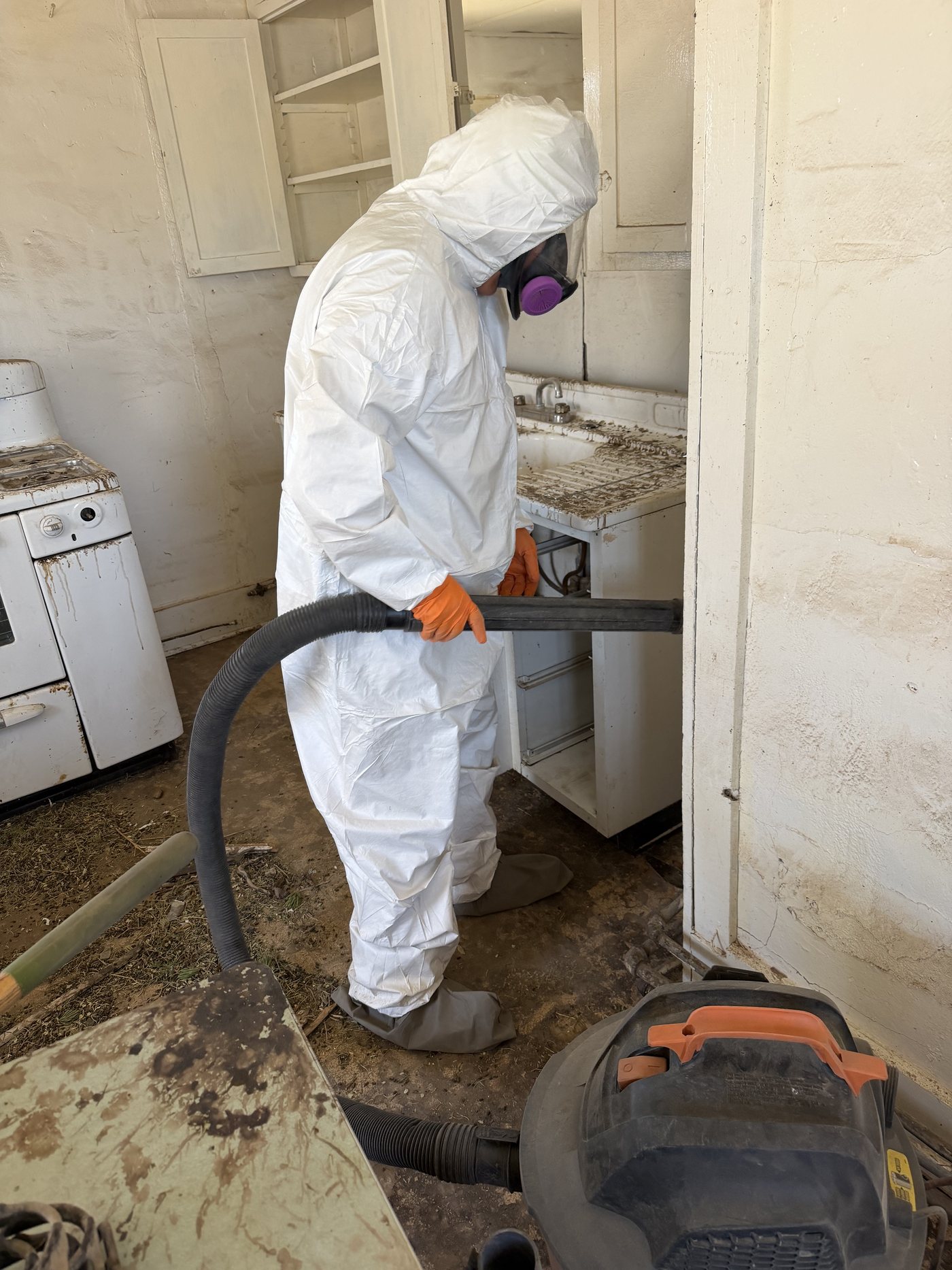
What has to come out
Restoration contractors classify river floodwater as the worst category of water damage, because it isn't clean. That changes what you can save.
- Usually removed: drywall and insulation that got wet (cut a couple of feet above the water line), carpet and pad, particleboard cabinets, upholstered furniture and mattresses.
- Usually saved: framing, concrete, tile, metal and other hard surfaces, once they're cleaned and fully dried.
- Crawlspaces and manufactured homes: standing water under the floor and soaked belly wrap hold moisture for months. They need to be opened and dried, not left alone because the living space looks fine.
Built before 1980? Read this before demo.
A lot of homes in Bloomfield, Kirtland and the older parts of Farmington were built when asbestos was still common in drywall joint compound, popcorn and textured ceilings, vinyl flooring and its mastic, and pipe and duct insulation. Lead paint is common in homes built before 1978.
Tearing out wet drywall and flooring is exactly the kind of work that releases asbestos fibers and lead dust. You can't see them, and they go home on your clothes. A few samples before demolition tell you what's safe to rip out and what needs to be handled by a licensed crew.
DEKON is licensed for asbestos and lead abatement in New Mexico (GS-29 #417265) with AHERA-certified inspectors on staff. We can sample and get you answers fast.
Keep mold from following
EPA guidance is to dry water-damaged areas within 24 to 48 hours. After a flood that window is usually already gone, which is why drying and removal matter more than anything else you do this month.
- Get wet material out, then run dehumidifiers and air movers with the windows closed
- Dry by the meter, not by touch. Studs and bottom plates stay wet long after drywall feels dry
- Don't close walls back up until the framing reads dry
- Don't bleach and paint over growth. It hides the problem and the paint peels
- Watch for a musty smell over the next few months, especially in closed rooms and when the furnace runs
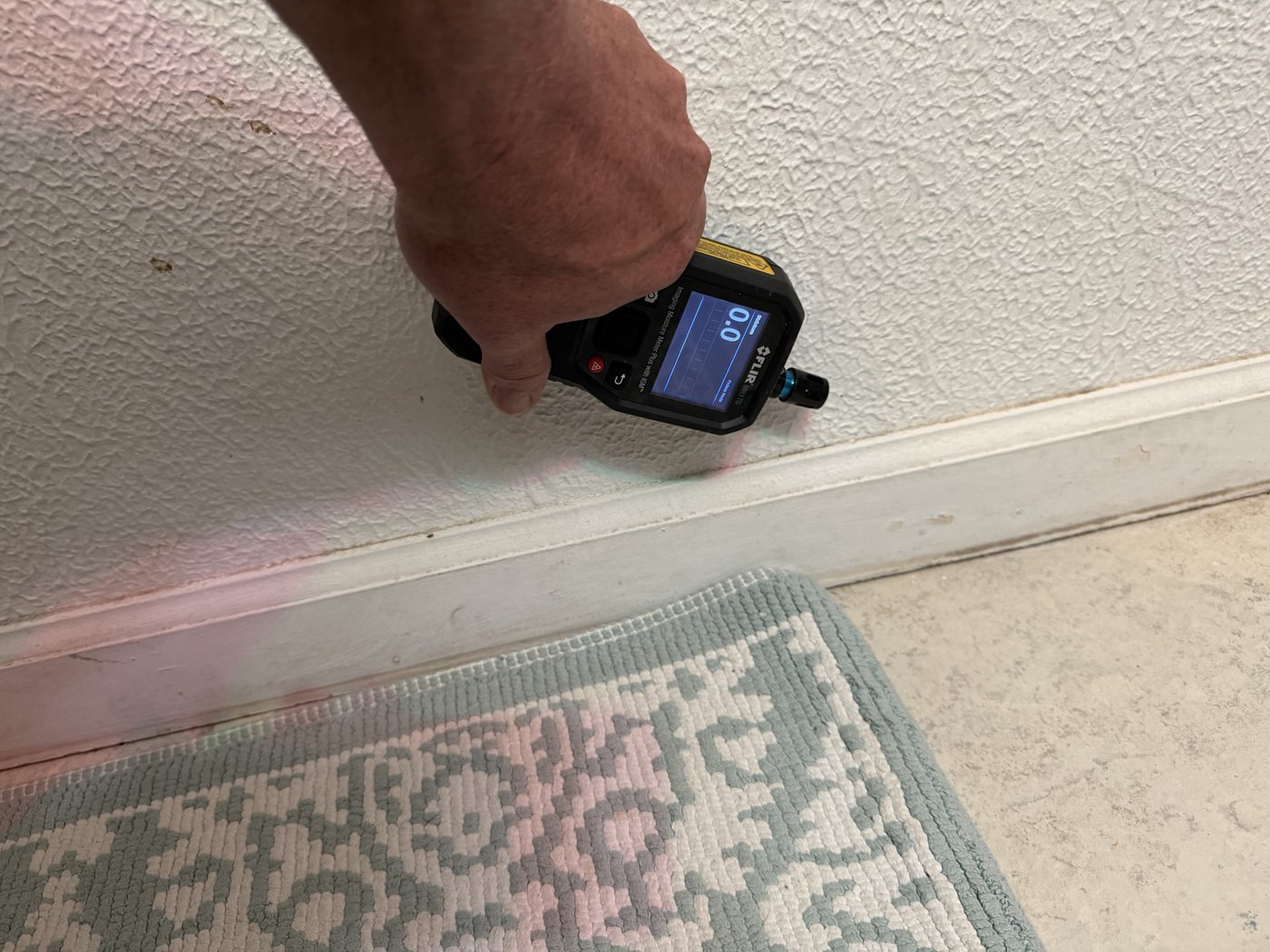
Check for mold before you rebuild
This is the step people skip, and it's the expensive one to get wrong. Once new drywall and paint go up, any growth left on the framing is sealed in the wall, and you find out months later from the smell, the stains, or a family member who keeps getting sick.
Before you close the walls: make sure the framing reads dry on a meter, look over every exposed stud and plate, and have air sampling done against an outdoor control. A clean result is your proof the space is ready to rebuild, and it's the record your insurer and any future buyer will want.
Debris and disposal
The City of Farmington has said it will pick up flood debris for free, but it must be sorted and set at the curb first. Check the Office of Emergency Management for the current sorting rules where you live. Material that tests positive for asbestos is the exception: it can't go out with regular debris and has to be bagged, manifested and taken to a permitted landfill by a licensed contractor.
Paperwork that helps your claim
- Photos and video of every room, plus the measured water line, before anything is removed
- A written report to your insurance carrier, and a dated log of every call
- Receipts for emergency work, pumps, fans and dehumidifiers
- Lab results if you had asbestos, lead or mold sampling done. Adjusters take a lab report more seriously than a photo
- Clearance results after remediation, so the record shows the space was clean before it was rebuilt
Local officials are also pursuing a major disaster declaration, which would open FEMA assistance to individuals. Keep your documentation either way.
How DEKON can help
We're local, licensed and insured, based right here in Farmington. These are our neighbors, and we're here to help.
- Asbestos and lead sampling before you tear anything out
- Licensed asbestos and lead abatement when it's positive
- Mold assessment with air sampling and an independent lab
- Mold remediation, drying, and clearance testing before you rebuild
- Documentation your insurer and assessors can use
Homes and businesses in Farmington, Bloomfield, Kirtland, Aztec, Shiprock and across San Juan County.
Common questions
Can I save drywall and carpet that sat in floodwater? Generally no. River water soaked into porous material carries contamination you can't clean out. Hard surfaces and framing usually can be cleaned and dried.
Do I need asbestos testing for my own house? If it was built before about 1980 and you're about to tear out drywall, ceilings or flooring, testing is the smart move. It protects you and everyone else in the house.
How do I know if mold is already growing? A musty smell, staining that spreads, or visible growth low on walls. If you're unsure, or there's an insurance claim, air sampling with an outdoor control gives you a real answer.
Do you work on the Navajo Nation? Yes. We work across the Four Corners including tribal lands.
DEKON Environmental Services — Where Safety and Quality Service Count!
General information. Follow official instructions from San Juan County Office of Emergency Management and your local utility. Not a substitute for an on-site evaluation of your building.